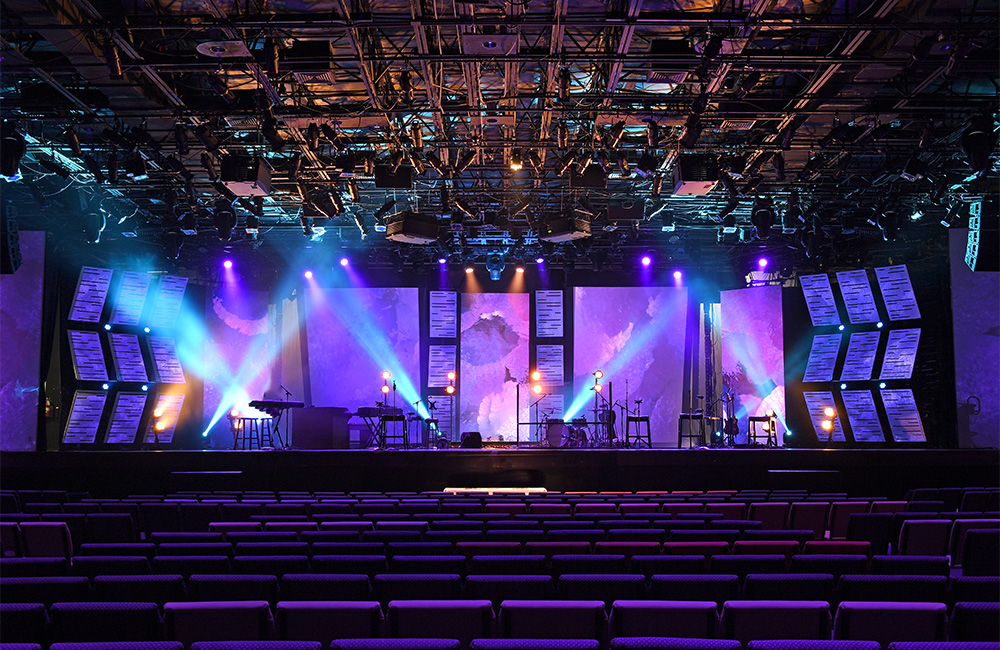
Audience attention has never been harder to hold. Competing demands, constant notifications, and dense programs create an environment where focus fades quickly, yet attention is the foundation of every successful event. When teams invest in thoughtful production design, they create conditions that support clarity and long-term retention.
Strategic choices across staging, lighting, content flow, and interaction help presenters communicate with impact and help audiences stay connected. Here, we’ll explore how smart technical and scenic decisions influence attendee engagement, and how Tallen applies these principles across live, hybrid, and virtual gatherings.
Why Attention Needs Support
Audience attention drops when visual, technical, or pacing elements work against the natural way people process information. Overly bright rooms tire the eyes. Stagnant slides drain energy. Poor audio forces audiences to strain. Long unbroken segments lead to cognitive fatigue. These barriers interrupt focus before the content has a chance to resonate.
Smart production design addresses those challenges. For example, specific lighting choices guide the eye, while scenic structure anchors the room, and balanced pacing keeps speakers and audiences aligned. Together, these choices strengthen engagement by shaping an environment built for comfort, clarity, and connection.
Attendee Engagement Strategies Rooted in Visual Design
Visual design serves as a communication tool, one that can either support the message or compete against it. LED displays help presenters break complex ideas into digestible components. Scenic elements reinforce key themes and establish hierarchy onstage. Well-planned lighting highlights speakers and creates moments of emphasis where messages land with greater weight.
Motion graphics carry their own influence. Smooth transitions and animated cues re-energize the audience, especially during long programs. When visuals, lighting, and scenic elements work as one system, they produce successful strategies that stay grounded in purpose, not decoration. These choices help audiences understand where to look, how to follow the story, and why each moment matters.
Pacing and Structure That Protect Attention
Even the strongest visuals fall flat without controlled pacing. Programs that run in long, uninterrupted blocks cause fatigue and break the flow between speaker and audience. Production teams help avoid this by building a rhythm into the show.
Segmenting content with intentional transitions gives the audience brief resets. Strategic musical cues shift energy without overwhelming the room. Branded bumpers and motion graphics help move the program along while reinforcing identity. These simple tools support engagement by treating attention as something that needs steady reinforcement.
Hybrid and virtual audiences rely on pacing even more. Clean transitions and balanced timing reduce drop-off and keep remote participants aligned with onsite moments.
Room Design That Shapes Focus and Comfort
Room design influences engagement even before a speaker begins. Seating layouts impact sightlines. Stage height affects connection. Screen placement determines how much effort attendees must exert to follow the content.
Production teams consider these factors carefully. Wide rooms may benefit from panoramic layouts that wrap visuals around the audience. Deep rooms often need vertical displays to maintain visibility. Lighting adjustments prevent glare and reduce eye strain. Even small scenic decisions help filter distractions, making it easier for audiences to stay locked in. Virtual and hybrid environments rely on similar principles.
Technical Reliability as the Backbone of Engagement
No engagement strategy survives technical instability. Poor audio, delayed transitions, or inconsistent streaming quickly erode trust and attention. Reliable systems protect against these breakdowns.
Balanced audio ensures every word reaches the room cleanly. Strong video playback prevents interruptions. Redundant streaming paths safeguard hybrid participation. Show callers maintain a steady pace and keep the program aligned with its intended flow. This layer of technical precision is essential. When audiences sense stability, they feel safe investing their attention.
How Tallen Supports Engaging, Attention-Ready Experiences
Tallen strengthens engagement through a combination of scenic creativity, technical expertise, and platform support. Our teams design environments that help audiences absorb information, respond to presenters, and stay present with lower cognitive effort. Lighting design reinforces emotional tone. Scenic structures guide visual focus. Motion graphics animate complex information. Hybrid support ensures that both onsite and remote audiences receive a unified experience. Technical crews maintain flawless transitions and protect the flow of the program.
Each of these decisions contributes to a cohesive ecosystem that supports attendee engagement strategies tailored to the event’s purpose. Attention is something audiences want to give; they simply need the right conditions. Smart production design creates those conditions and transforms events into experiences that feel dynamic and memorable.